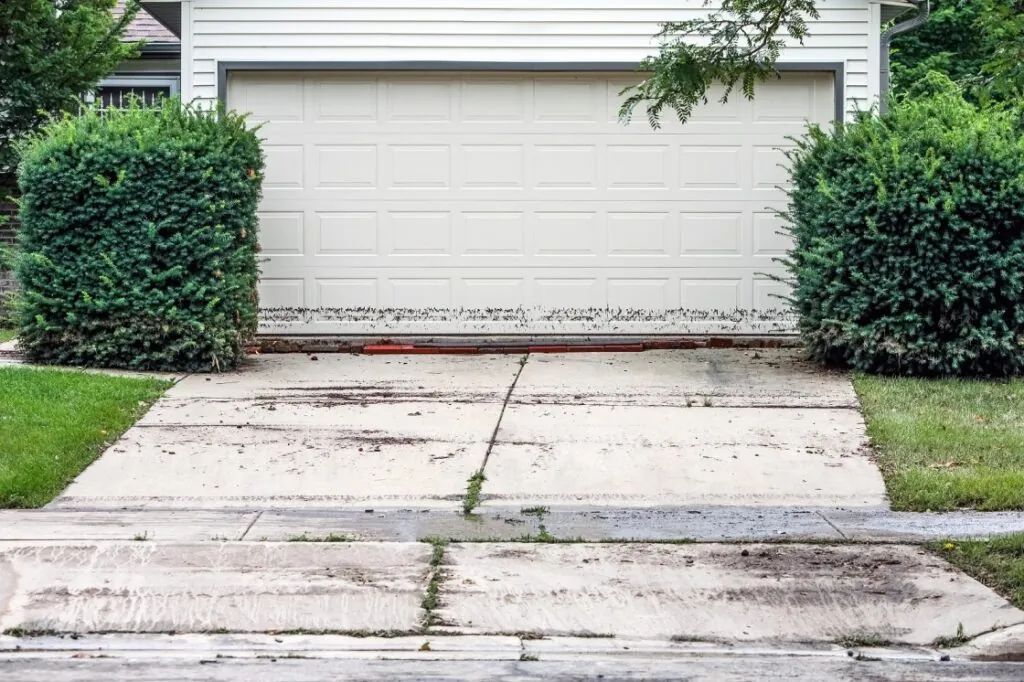
Homeowner Guide
If you live near the water in Pinellas County, you already know your home takes on a different kind of wear than homes further inland. Salt air, humidity, storm surge, and the occasional flooded street aren't rare events here — they're part of coastal living. What a lot of homeowners don't realize is just how much of that wear ends up on their garage door.
Garage doors sit low, close to the ground, and are built from a mix of metal parts that were never designed to sit in standing water. After a heavy rain event or a tropical storm pushes water up a driveway, the damage isn't always obvious right away. It shows up weeks later as rust, a door that won't balance right, or an opener that starts acting unpredictably.
This guide walks through exactly how flooding and coastal exposure affect every major part of your garage door system, and what homeowners in St. Petersburg, Clearwater, and the surrounding communities can do about it.
Barrier island and near-shore communities tend to see this wear the fastest, but it isn't limited to homes right on the beach. Even a few miles inland, driveways and garages can take on water during heavy rain events, and salt-laden air travels further than most people expect. Whether your street floods occasionally or you've never had water reach your driveway, understanding what to watch for helps you catch problems before they become expensive ones.
Homes near the Gulf deal with a combination of factors that inland homes simply don't face as often:
None of this means a garage door near the coast is doomed to fail early — it just means the maintenance schedule that works fine in a drier, inland climate isn't quite enough here.
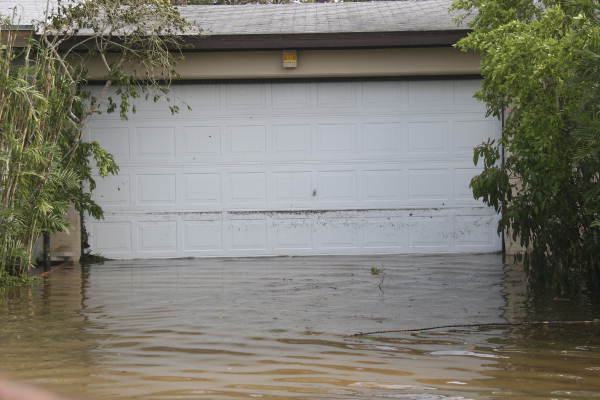
It doesn't take a major hurricane to cause damage — even a few inches of standing water against the bottom of the door is enough to start the clock on rust and corrosion. If your street floods during heavy rain, it's worth checking your garage door hardware afterward, even if nothing looks obviously wrong.
Rollers, tracks, and bearings are the parts that let your door glide up and down, and they're also some of the lowest parts on the entire system — meaning they're often the first to sit in water during a flood event.
If your garage flooded even briefly, it's worth having the rollers and tracks inspected. A garage door roller replacement is a straightforward fix and far cheaper than waiting until a seized roller damages the track or opener.
A roller left to rust usually doesn't fail all at once — it gets stiffer, then starts binding in the track, often picking up grime and mildew along the way in a humid Florida garage. Eventually a rusted, mold-caked roller can seize, crack, or pop out of the track entirely, and that's exactly how a door ends up crooked and in need of off-track repair. Catching a bad roller early is a lot simpler than dealing with a door that's already jumped its track.
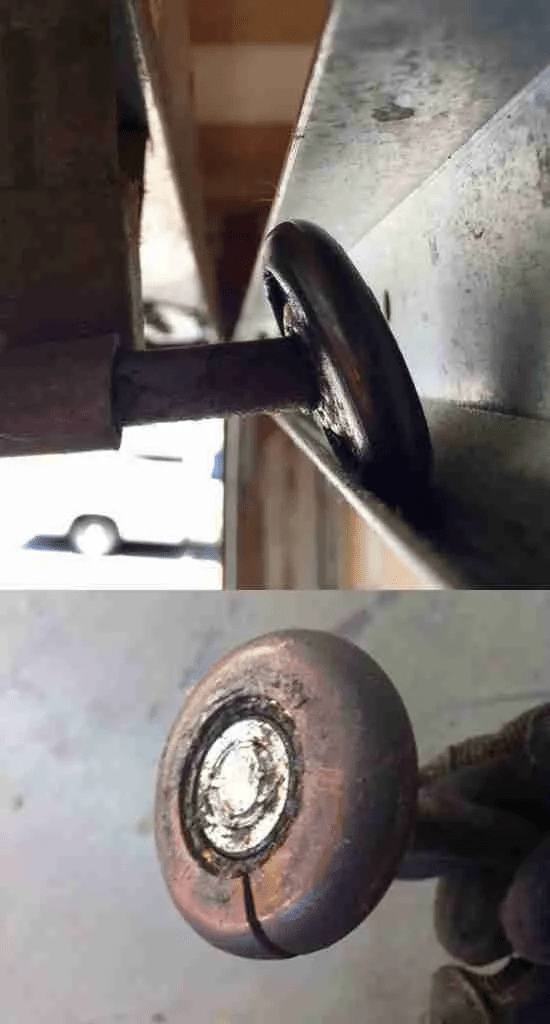
Rollers sit right at the bottom of the track, which makes them one of the first parts to sit in floodwater. Once rust gets inside the bearing, the roller stops turning freely and starts dragging — and a dragging roller wears out the track right along with it.
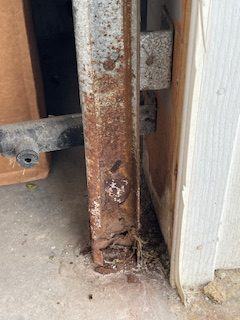
It's not just the rollers — the track itself can rust through and warp after repeated flooding, especially near the base where water sits longest. A badly corroded track can bend, crack, or pull away from its mounting, and at that point patching it isn't really an option — the track needs to be replaced before the door is safe to run again.
The bottom section of your garage door takes the most direct hit during a flood, since it's the first — and sometimes only — part that touches rising water.
After any flooding event, the bottom few inches of your door deserve a close look — this is the area we check first on every post-storm inspection call.
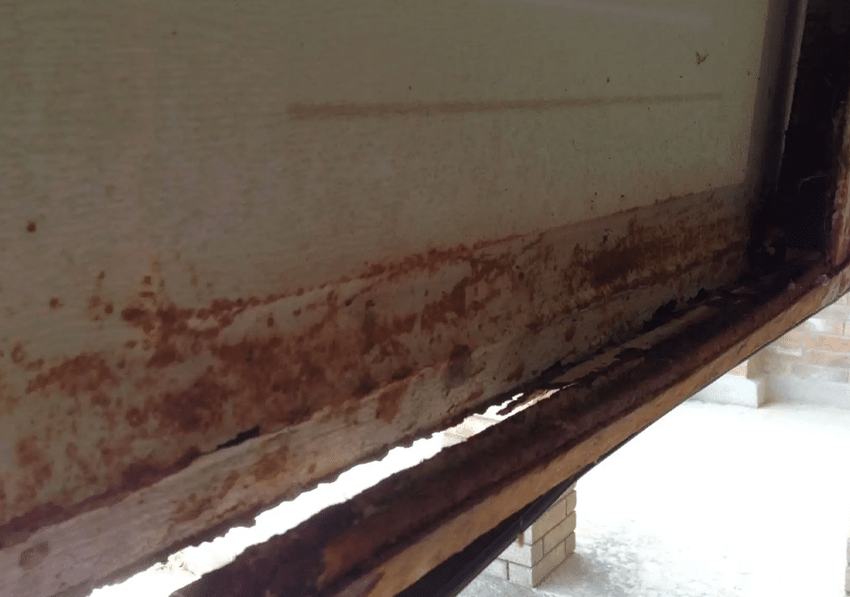
This is what repeated water exposure looks like after just a season or two — rust climbing up from the bottom edge, eating through the paint and into the metal underneath. Once it starts, it keeps spreading unless it's cleaned and treated.
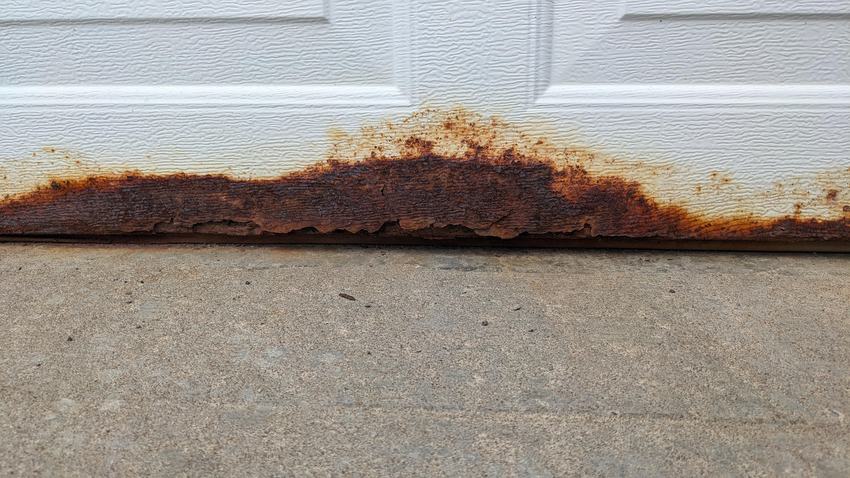
Given enough time, surface rust turns into flaking, pitted metal like this. At this stage it's more than cosmetic — the panel itself is weakening, and it's usually cheaper to address a panel or door replacement than to keep patching a bottom section this far gone.
Cables and springs do the heavy lifting on every garage door, and both are vulnerable to water exposure in different ways.
Because both of these parts are under constant tension, we always recommend professional inspection rather than DIY — a garage door cable repair or garage door spring repair is a routine job for a trained technician, but a genuine safety risk to handle without the right tools.
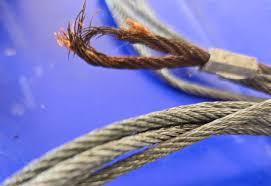
Before a cable fails completely, it usually starts fraying like this — individual strands breaking down after repeated exposure to moisture. Once you see fraying, the cable is on borrowed time and should be replaced before it lets go under load.
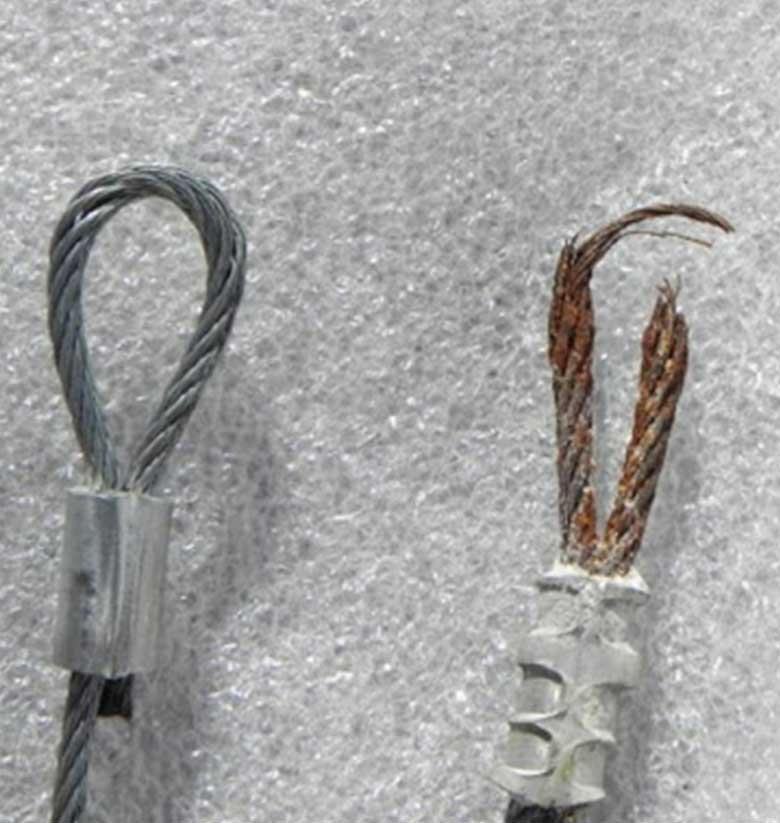
Side by side, the difference is obvious — a properly seated cable (left) versus one that's corroded and unraveling (right). This is exactly the kind of wear a post-flood inspection is meant to catch before it becomes a dropped door.
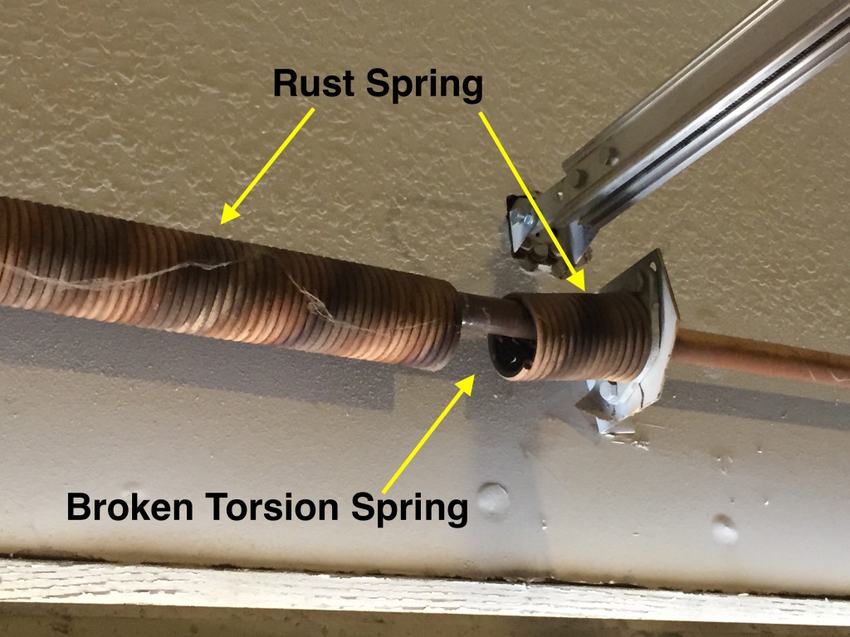
This spring shows both problems at once — visible rust along the coils and a full break at the center. Corrosion doesn't just look bad, it thins the metal until the spring can no longer handle the tension, and it lets go without much warning. This is a job for a professional spring repair, never a DIY fix.
Hinges connect each panel of your door and allow it to flex as it moves along the curved part of the track. They're small, but when they corrode, the effects show up everywhere else in the system.
Hinges are inexpensive to replace but easy to overlook during a quick visual check — they're worth including in any post-flood or annual inspection.
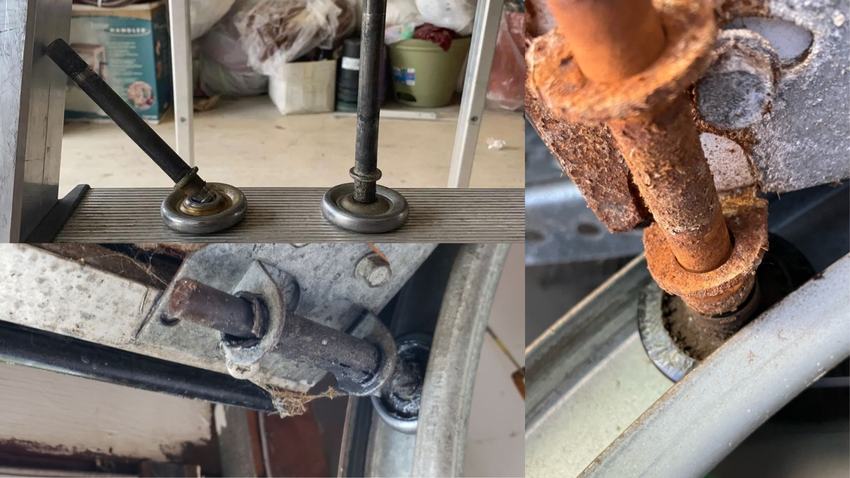
Rollers, hinge pins, and bearing hardware all corrode the same way — slowly, then all at once. Rust like this adds friction to every part of the door's movement, which means the opener has to work harder just to do what it used to do easily.
The electrical side of your garage door system is just as exposed as the mechanical side, and water damage here can be less obvious until the door starts behaving strangely.
If your door's safety reversal system is acting up after a storm, don't bypass or disable it — that's a real safety feature. A quick garage door sensor repair or, if needed, an garage door opener repair usually resolves it.
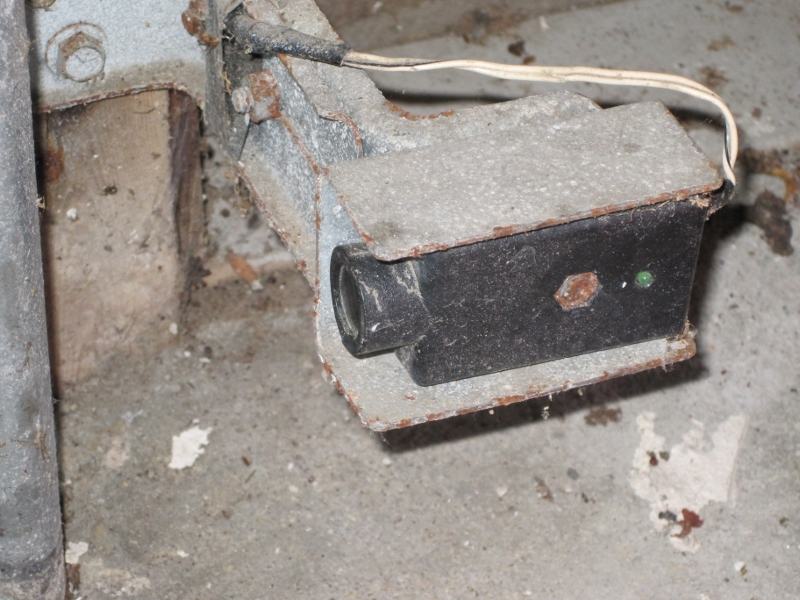
Mounted just inches off the garage floor, safety sensors are usually the very first electrical component to get hit when water rises — and they rarely survive a real flood without needing attention. If your door started acting up right after a storm, the sensors are the first place we check.
The material your door is made of makes a real difference in how it holds up near the coast.
If you're rebuilding after storm damage or simply ready for an upgrade, insulated steel doors are usually the more resilient choice for homes in flood-prone areas. We can walk you through new garage door installation options built for coastal conditions.
Not all damage comes from a single flood event. Salt air and humidity work slowly, coating metal surfaces in a fine layer of moisture and salt that accelerates rust over months and years.
A yearly garage door tune-up that includes lubrication and a hardware inspection is one of the most effective ways to catch corrosion before it becomes a structural problem.
Homeowners throughout St. Petersburg, Clearwater, Largo, Seminole, Pinellas Park, Gulfport, Belleair, Belleair Bluffs, Safety Harbor, Dunedin, and Palm Harbor can significantly extend the life of their garage door with a few consistent habits:
A little routine attention goes a long way toward avoiding the kind of emergency call that comes after a spring finally gives out or a rusted cable snaps.
It's also worth timing one inspection before hurricane season ramps up each year. Catching a weakened bracket, a rusted cable, or a sluggish opener in advance means one less thing to worry about when a storm is actually in the forecast — and it's a lot easier to schedule a routine visit than to wait for an emergency call after the fact.
Yes. Even a few inches of water reaching the bottom bracket, seal, and lowest rollers can start the corrosion process, especially combined with Florida's humidity.
Watch for new noises, a door that feels unbalanced, rust forming on hardware, or a bottom seal that no longer sits flush. If in doubt after a storm, a professional inspection is the safest way to check.
No — avoid operating the door until it's been inspected. Running a door with water-affected springs, cables, or an opener can cause further damage or create a safety hazard.
Generally yes. Steel holds up better structurally against water exposure, though it can still rust at exposed or damaged spots. Wood is more prone to swelling, warping, and rot when it stays wet.
We recommend at least once a year, with an additional check after any major storm or flooding event — more frequently than homes further inland typically need.
Light surface rust caught early can often be cleaned and treated. Once rust has pitted or weakened the metal, especially on load-bearing parts like springs and cables, replacement is the safer option.
Sensors sit low near the tracks, right at flood height, so moisture intrusion into the housing or wiring is a common cause. Cleaning and realignment resolves many cases; persistent issues may need a sensor replacement.
Coverage varies by policy and is a question best directed to your insurance provider. What we can help with is identifying and repairing the damage itself, whatever the cause.
Yes — we serve homeowners throughout Pinellas County and the greater Tampa Bay area, including the barrier island communities.
If your garage flooded or you're not sure how the recent weather treated your door, it's worth a professional look before you use it again. We help homeowners throughout St. Petersburg, Clearwater, Largo, Seminole, Dunedin, Palm Harbor, and the surrounding Pinellas County communities inspect and repair storm and flood-related damage — with free estimates and fast response.