
Maintenance Guide
Living in Florida means learning to manage the heat, but if you own a home in this specific part of Hillsborough County, you are dealing with a totally different environmental challenge. Between the intense summer sun, seasonal storms, and the dense, moisture-heavy air rolling off the Hillsborough River, the local climate creates a perfect storm for metal corrosion.
When you are dealing with Garage Door Repair in Temple Terrace, the number one culprit behind sudden mechanical failure isn't poor manufacturing or accidental damage. It is rust.
As we move through 2026, homeowners are realizing that ignoring the early warning signs of hardware corrosion leads to massive, expensive system failures. The hardware that was installed on a historic 1920s Mediterranean Revival home or a mid-century property just a decade ago might already be reaching its breaking point due to the constant barrage of river humidity.
This guide is designed to help you protect your home, extend the life of your hardware, and understand exactly what it takes to maintain an overhead door system in our unique subtropical environment.
Many of the calls we get for Garage Door Repair in Temple Terrace start with a homeowner mentioning a faint grinding noise or a door that suddenly feels incredibly heavy. By the time our technicians arrive, the root cause is almost always advanced metal fatigue caused by environmental moisture. Here is exactly why this happens in our area.
If your property is situated anywhere near the Hillsborough River corridor, you are dealing with elevated humidity levels that inland subdivisions simply do not experience. The river generates significant morning fog and heavy dew. Overnight, the temperature of your steel garage door tracks, springs, and hinges drops. When the warm, saturated morning air hits that cooler metal, condensation instantly forms.
Unlike a passing rainstorm that dries up in the afternoon sun, this micro-layer of condensation sits in the dark, enclosed space of your garage for hours. Because water is a highly effective solvent, it slowly eats away at the galvanized zinc coating on your steel hardware. Once that protective barrier is breached, the raw iron underneath is exposed to oxygen and moisture, and the rusting process rapidly accelerates.

Moisture alone is bad, but when you combine it with the dirt and debris blowing around Florida driveways, the problem gets exponentially worse. Sand, grass clippings, and dust constantly blow into your garage. If your tracks and hinges are wet from condensation, this dirt sticks to the metal.
This creates a sponge effect. The dirt holds the moisture directly against the steel components, preventing them from ever fully drying out.
Furthermore, when your garage door operates, the rollers grind this wet, gritty dirt directly into the tracks. It acts like liquid sandpaper, aggressively stripping away any remaining protective finishes. This is why you will often see thick, brown sludge building up at the bottom of the vertical tracks right near the floor.
You cannot change the weather, but you can change how your overhead system reacts to it. By implementing these four strategies, you can drastically reduce the rate of corrosion and avoid catastrophic hardware failures.
One of the biggest mistakes homeowners make is spraying WD-40 or slathering heavy white lithium grease onto their tracks and hinges. Standard WD-40 is a solvent, not a lubricant; it actually strips away existing lubrication and leaves the metal exposed to the humid air. Heavy grease is just as bad because it acts like a magnet for dirt, creating that abrasive paste we mentioned earlier.
Instead, you need to use a high-quality, silicone-based garage door spray. Silicone goes on wet to penetrate the hinges and roller bearings, but it dries to a slick, non-tacky finish. This creates a waterproof barrier that repels river humidity without attracting sand and dust. For optimal protection, you should wipe down your tracks with a dry rag and apply a fresh coat of silicone spray to all moving metal parts every three to six months.
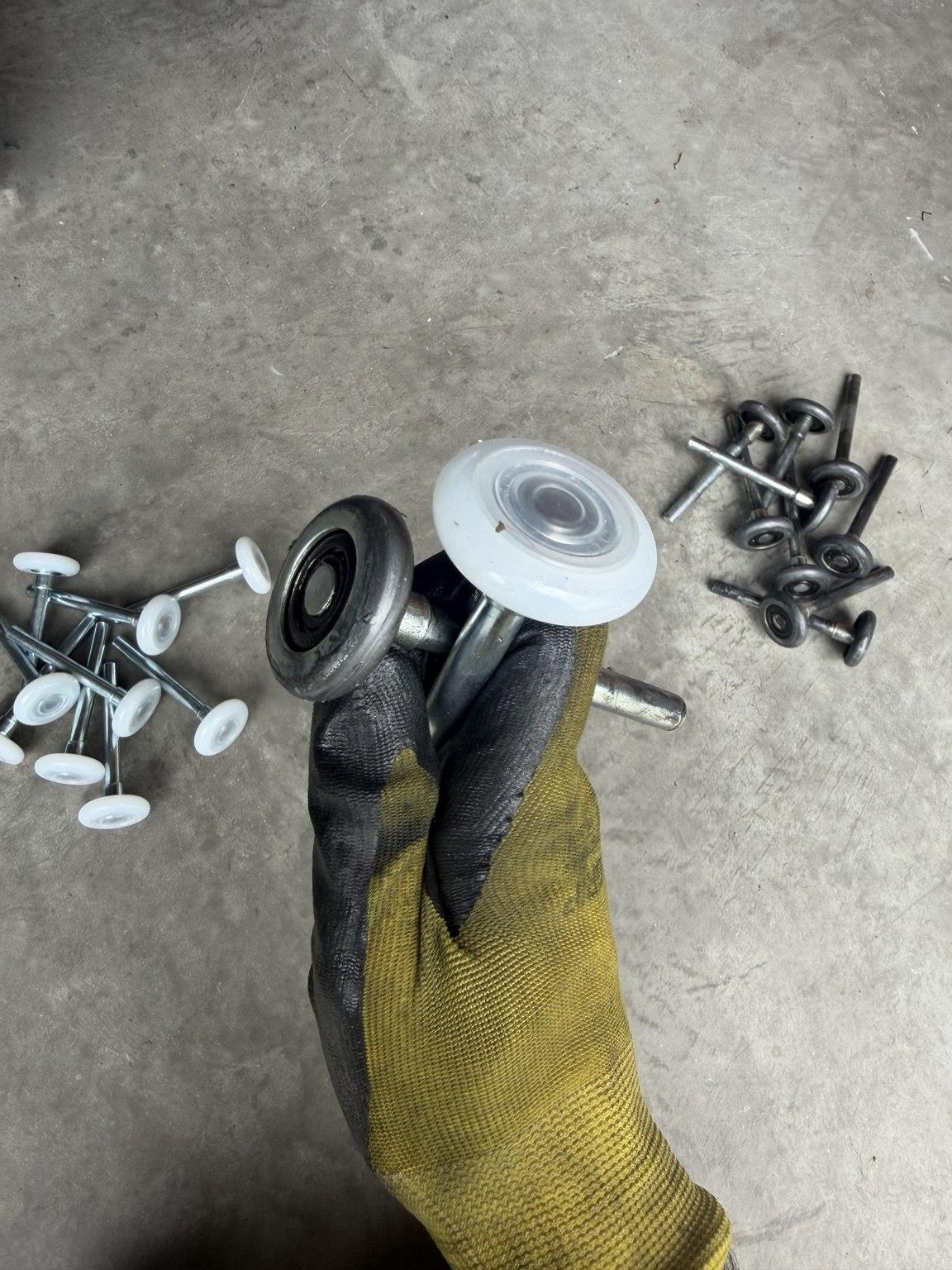
If your garage door is currently running on cheap, builder-grade steel rollers, you are fighting a losing battle against rust. Steel rollers run directly against steel tracks. Over time, the friction wears down the protective coating on both surfaces, leaving bare metal exposed to the humid air. Eventually, the ball bearings inside the steel rollers rust completely, causing the wheels to drag instead of roll.
The smartest upgrade you can make is swapping out steel rollers for advanced nylon rollers containing sealed ball bearings. The nylon wheel glides silently against the metal track, eliminating metal-on-metal friction entirely. Because the ball bearings are sealed inside a weather-tight casing, the Hillsborough River moisture can never reach them. While you are at it, consider upgrading heavily pitted hinges to heavy-duty, corrosion-proof alternatives that are specifically designed for coastal and high-humidity climates.
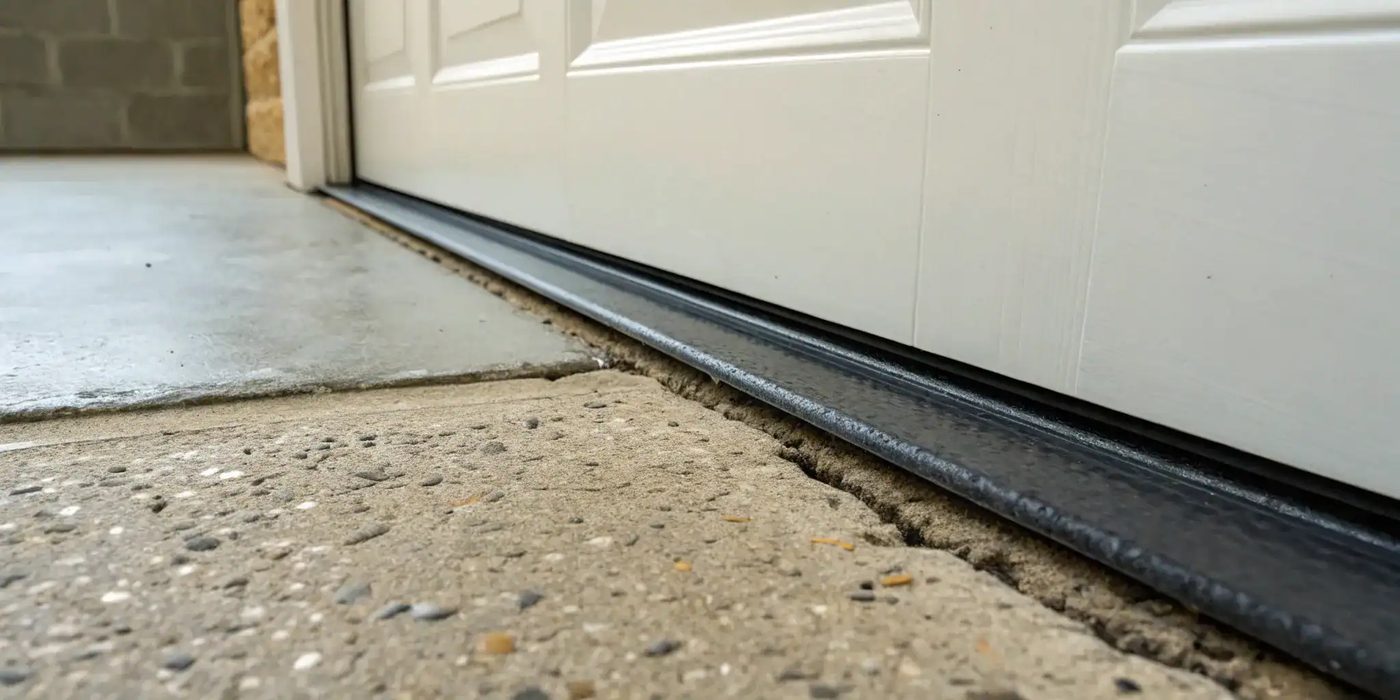
Your garage door is only as secure as its perimeter seal. At the bottom of your heavy panels sits a rubber U-shaped astragal (the bottom weather seal). Its job is to compress against the concrete floor, keeping rainwater, pests, and ambient humidity outside where they belong.
However, intense Florida heat causes that rubber to dry rot, crack, and shrink over the years. If you can see daylight under your closed door, the seal has failed. A compromised bottom seal allows humid air to flow freely into the garage overnight, guaranteeing that your interior hardware will start to sweat and rust. Replacing this seal is a highly affordable maintenance task that pays massive dividends in rust prevention.
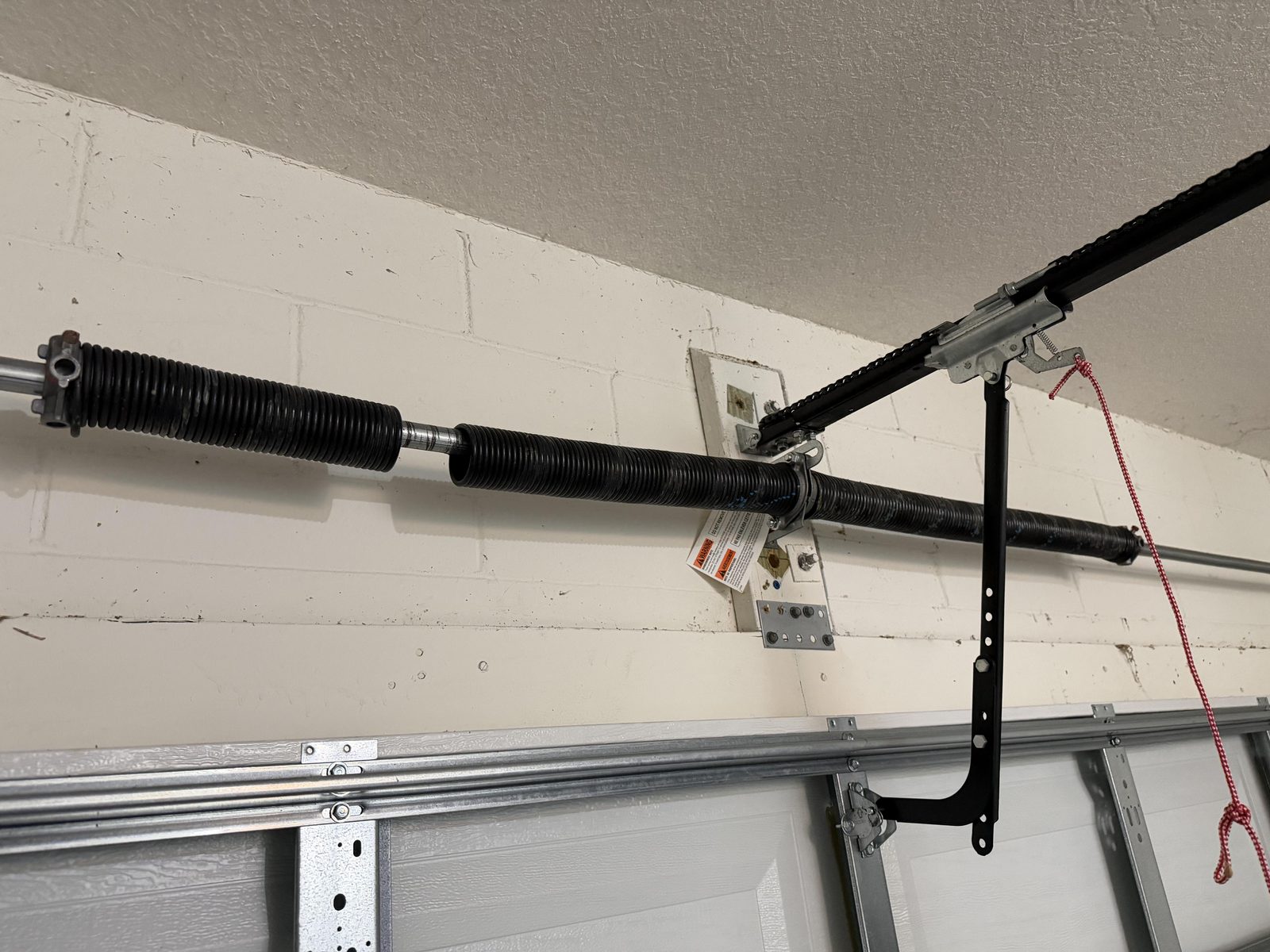
Surface rust on a track is annoying, but rust on a torsion spring or lifting cable is incredibly dangerous. The torsion spring, mounted above the door, bears the entire 200-to-300-pound weight of the panels. It is tightly wound under immense kinetic energy. When a spring rusts, the friction between the metal coils increases dramatically every time the door opens or closes. This friction weakens the steel until the spring eventually snaps with a sound like a gunshot.
Similarly, the heavy-duty braided lifting cables running down the sides of the door are highly susceptible to moisture trapped at the bottom of the tracks. If these cables fray or snap due to rust, the heavy door can crash down freely. You should visually inspect your springs and cables every few months. If you see an orange tint or heavy flaking, it is time to call a professional before a failure traps your car inside.
Whether you need minor maintenance or full-scale Garage Door Repair in Temple Terrace, understanding the difference between surface rust and structural failure is essential. If you notice minor orange spotting on the exterior face of your steel panels, you can safely resolve this yourself before it eats through the metal.
Here is the proper way to handle cosmetic surface rust:
Critical Warning: This DIY process is strictly for the flat exterior panels. You must never attempt to sand, paint, or scrub rust off of the torsion springs, lifting cables, or bottom roller brackets. These components are under extreme mechanical tension. Tampering with them can cause the stored energy to release instantly, resulting in severe physical injury. Always leave tension-bearing components to a trained technician.
Eventually, every homeowner faces the decision of whether to keep patching up an old system or invest in a brand-new upgrade.
If your tracks are slightly misaligned, a few rollers are squeaking, or a spring snapped prematurely due to an isolated rust spot, scheduling a repair is highly cost-effective. A qualified technician can swap out the damaged hardware, apply professional-grade silicone lubricant, and rebalance the system in a single afternoon.
However, if your door is severely rusted, sagging in the middle, or requiring constant service calls just to open and close, pouring money into aging mechanics is a poor financial strategy. Furthermore, the 2026 Florida Building Code has strict requirements regarding wind-load ratings. Temple Terrace operates its own building department (separate from Hillsborough County) and requires specific permits for replacements to ensure doors can withstand hurricane-force winds.
An old, rusted door is a severe structural liability during a tropical storm. If the door blows in, the sudden pressurization of the garage can literally rip the roof off the house. Opting for a New Garage Door Installation in Temple Terrace provides peace of mind. A modern upgrade means you get heavy-gauge, wind-rated steel, advanced corrosion-proof hardware, and polyurethane insulation that blocks out the brutal summer heat, instantly lowering your monthly air conditioning bills.
A catastrophic mechanical failure never happens at a convenient time. When a rusted cable snaps or a spring breaks, a 300-pound door becomes an impenetrable wall that traps your vehicles inside and leaves your property vulnerable.
When you find yourself dealing with a collapsed overhead system or a motor that simply refuses to lift the heavy load, you need a rapid, decisive response. Seeking Emergency Garage Door Repair Temple Terrace ensures that a highly trained local technician arrives promptly to secure the area, release the tension safely, and restore your access without putting your family at risk.
Because we understand the urgency of these situations, we specialize in Same Day Garage Door Repair for local residents. Our service trucks arrive fully stocked with heavy-duty lifting cables, high-cycle replacement springs, and advanced nylon rollers so we can fix the problem on the spot, rather than making you wait weeks for parts to ship.
Don't let a rusted track or a weak spring turn into a dangerous situation. For reliable Garage Door Repair in Temple Terrace, our team carries the exact weather-resistant hardware required to beat the local humidity. Whether you need a seasonal tune-up or immediate assistance for a trapped vehicle, we are here to ensure your system runs smoothly, quietly, and safely for years to come.
Corroded rollers, pitted hinges, failing bottom seals, and rusted springs or cables — inspected and replaced with weather-resistant hardware built for Florida humidity. Upfront pricing, same-day service, open 24/7.